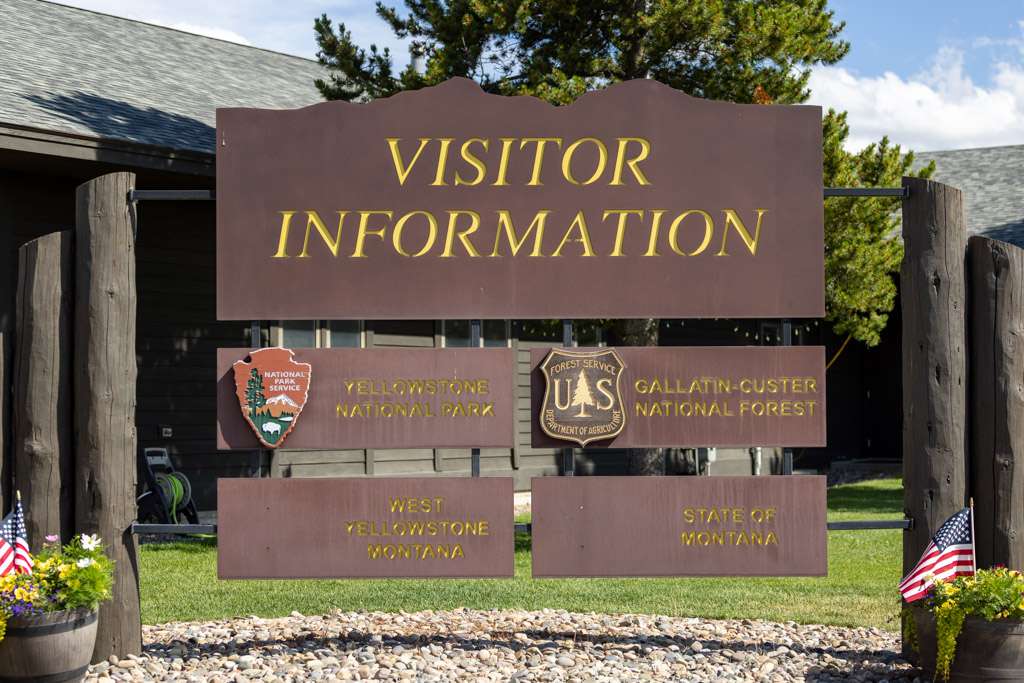
A family trip to Yellowstone can be more than a sightseeing adventure. For kids, it can become a hands-on outdoor classroom where geysers become science lessons, wildlife sightings become research opportunities, and scenic drives become nature expeditions.
One of the best ways to help children connect with Yellowstone National Park is through the Junior Ranger program. Designed to encourage young visitors to learn about national parks and become better stewards of public lands, Junior Ranger activities can give children a greater sense of purpose during a family vacation.
For families staying in West Yellowstone, there are plenty of opportunities to combine Junior Ranger learning with wildlife watching, geothermal exploration, scenic drives, short walks, and other family-friendly experiences.
Whether your children are fascinated by animals, volcanoes, forests, rivers, or Yellowstone’s history, there are many ways to turn your trip into an educational adventure.
What Is the Junior Ranger Program?
The Junior Ranger program is a National Park Service educational program that encourages children to learn about a national park while visiting.
At participating parks, children can typically complete activities in a Junior Ranger booklet and share what they have learned with a ranger or follow the park’s specific instructions for earning a badge.
Yellowstone offers its own Junior Ranger opportunities, making it an excellent destination for families interested in combining recreation and education.
The activities can vary by program and age group, so check current National Park Service information before your trip for the latest requirements and availability.
Why Junior Ranger Activities Are Great for Yellowstone
Yellowstone is an enormous natural laboratory.
Children can learn about geology, wildlife, ecology, conservation, weather, history, and human relationships with the landscape simply by exploring the park.
Instead of asking kids to spend the day looking at scenery, Junior Ranger activities encourage them to ask questions.
Why does a geyser erupt?
Why do bison gather in certain areas?
What makes Yellowstone’s hot springs colorful?
How do animals survive the winter?
Why is it important to stay on designated trails and boardwalks?
These questions can turn a family vacation into a memorable learning experience.
Start at the West Entrance
For families staying in West Yellowstone, the West Entrance is a natural starting point.
Before heading deep into the park, make sure everyone understands the day’s plan and has the supplies they need.
The short drive from West Yellowstone into Yellowstone can also be used as the beginning of your children’s adventure.
Give kids a map and let them identify the route you are taking.
Ask them to watch for rivers, forests, mountains, and wildlife.
Even before reaching your first major attraction, they are already practicing observation skills.
Visit a Yellowstone Visitor Center
Visitor centers are among the best places to introduce children to Yellowstone.
They can provide maps, educational exhibits, park information, and current details about ranger programs and Junior Ranger activities.
For families, a visitor center can also help put the landscape into context.
Before heading out, encourage your children to choose one thing they want to learn about during the day.
One child might choose wildlife.
Another might choose volcanoes.
Another might become interested in geysers.
This gives everyone a personal mission.
Learn About Yellowstone’s Geothermal Features
Yellowstone’s geothermal features are perfect for Junior Ranger-style learning.
The park sits above a major volcanic system, creating an extraordinary collection of geysers, hot springs, mud pots, and fumaroles.
For kids, these features can seem almost magical.
But there is plenty of science behind them.
During your visit, ask children to observe:
- The color of hot springs
- The movement of water
- Steam rising from geothermal features
- Sounds coming from geysers
- Differences between hot springs and mud pots
- Changes in the surrounding vegetation
Encourage them to write down observations in a notebook.
Explore Old Faithful
Old Faithful is one of the most recognizable attractions in Yellowstone and a natural stop for families.
Watching an eruption gives children an opportunity to connect what they have learned about geothermal activity with something they can see happening in real time.
Before the eruption, talk about how geysers work.
Ask children to predict what they think will happen.
Afterward, discuss what they observed.
You can make the experience even more engaging by encouraging kids to record the approximate time of the eruption and compare it with the park’s predictions.
Discover the Upper Geyser Basin
The area surrounding Old Faithful contains an extraordinary concentration of geothermal features.
Depending on your family’s abilities and interests, explore an appropriate portion of the developed boardwalk system.
Rather than trying to see everything, choose a few features and study them carefully.
Ask children to compare:
- Shape
- Color
- Temperature
- Water movement
- Steam
- Surrounding vegetation
This simple exercise can turn a walk into a geology investigation.
Make Grand Prismatic Spring a Science Lesson
Grand Prismatic Spring is one of the most visually impressive places in Yellowstone.
Its brilliant colors can be a great starting point for talking about thermophiles, microorganisms, water temperature, and geothermal environments.
Ask your children why they think the spring has different colors.
Then encourage them to observe how the colors change from the center toward the outer edges.
The important thing is not memorizing every scientific term.
It is encouraging children to observe something unusual and ask why it happens.
Turn Wildlife Watching Into Research
Wildlife viewing is one of the easiest ways to incorporate Junior Ranger-style learning into your Yellowstone trip.
Children can keep a wildlife journal throughout the vacation.
For each animal they see, record:
- Species
- Location
- Time of day
- Number of animals
- Behavior
- Habitat
You can even create a simple wildlife checklist.
Possible animals include:
- Bison
- Elk
- Pronghorn
- Moose
- Coyotes
- Bears
- Wolves
- Ravens
- Eagles
- Waterfowl
Do not approach animals to get a better view.
Teach children that observing wildlife responsibly is part of being a good park steward.
Teach Wildlife Safety
Wildlife safety should be one of the most important lessons children take away from Yellowstone.
Bison and other large animals may appear calm, but they are wild animals capable of moving quickly.
Teach children to:
- Never feed wildlife
- Never approach animals
- Follow posted distance requirements
- Stay with adults
- Listen to ranger instructions
- Stay inside the vehicle when appropriate
Explain that respecting wildlife helps protect both visitors and animals.
This is one of the most valuable lessons a Junior Ranger can learn.
Explore the Madison River
The Madison River area near the West Entrance offers another opportunity for children to study Yellowstone’s ecosystems.
Encourage kids to look for signs of life around the water.
They might observe:
- Birds
- Fish
- Insects
- Trees
- Wildflowers
- Animal tracks
Ask them how the river supports plants and animals.
You can also talk about how rivers connect different parts of an ecosystem.
Create a Yellowstone Nature Journal
A nature journal can accompany your family throughout the entire trip.
Children can use it to:
- Draw animals
- Sketch geysers
- Record weather
- Describe landscapes
- Write questions
- Record wildlife sightings
- Collect observations
You can make the journal as simple or detailed as your child wants.
Younger children can draw pictures.
Older children can write paragraphs or create species lists.
Go on a Family-Friendly Hike
A Junior Ranger adventure does not have to involve a difficult hike.
Choose a trail appropriate for your family’s abilities and focus on what you can discover along the way.
Before starting, give children a mission.
For example:
“Find three different types of trees.”
“Look for signs of wildlife.”
“Find evidence that water has shaped the landscape.”
“Identify five different sounds.”
This approach keeps children focused on exploration rather than distance.
Study Yellowstone’s Forests
Yellowstone’s forests provide excellent opportunities for children to learn about ecosystems.
Look at the different tree shapes, bark patterns, and ground vegetation.
Ask kids to consider:
- Why do trees grow where they do?
- What animals depend on the forest?
- What happens when a tree falls?
- How does fire affect the ecosystem?
- Why might some areas have more trees than others?
These questions can introduce concepts about habitat, succession, and natural processes.
Learn About Fire in Yellowstone
Wildfire is a natural part of many western ecosystems, including Yellowstone.
Children may notice areas of forest that look different from surrounding landscapes.
Use these observations to talk about how fire can affect forests and wildlife.
The lesson is not simply that fire is destructive.
In many ecosystems, fire is also an important natural process.
Learning this can help children understand that national parks are managed differently from ordinary urban landscapes.
Become a Junior Ranger on the Road
Your educational activities do not have to stop when you leave Yellowstone.
During your RV drive back to West Yellowstone, ask kids questions about what they saw.
Try:
“What was the most interesting animal?”
“Which geothermal feature surprised you?”
“What did you learn about wildlife?”
“What would you tell someone visiting Yellowstone for the first time?”
This gives children a chance to reflect on their experience.
Keep a Family Wildlife Count
Turn the entire vacation into a friendly competition.
Create a family wildlife count.
Each person can keep track of animals they personally observe.
At the end of the trip, compare results.
You might discover that one person became an expert at spotting birds while another consistently found bison.
Keep the competition friendly and always prioritize safe wildlife viewing.
Use the RV as a Learning Center
An RV can be an excellent place to continue Junior Ranger activities.
After returning from the park, spread out maps and notebooks at the dinette.
Have children draw what they saw.
Look through photographs together.
Write down new questions.
Review the day’s wildlife observations.
If your RV has a comfortable outdoor area, you can even turn the evening into a family nature discussion.
This makes the campground part of the educational experience.
Plan a Junior Ranger Evening
After dinner, give each child a few minutes to present something they learned.
One child might explain how geysers work.
Another might talk about bison behavior.
Another might describe Yellowstone’s rivers.
Another might share a favorite photograph.
These presentations do not need to be formal.
They can be fun, short, and conversational.
Let Kids Ask the Rangers Questions
If you encounter a ranger or attend a ranger program, encourage your children to ask questions.
Children often learn more when they are actively involved in a conversation.
They might ask:
“How do you know when a geyser will erupt?”
“Where do wolves live?”
“How do animals survive winter?”
“How hot is a hot spring?”
“Why can’t we touch the water?”
Rangers can provide firsthand information and help children see Yellowstone from a different perspective.
Explore Beyond Yellowstone
West Yellowstone also provides family-friendly attractions that can complement your Junior Ranger experience.
The Grizzly & Wolf Discovery Center is an excellent example.
Children can learn more about some of Yellowstone’s most fascinating wildlife while observing animals in a controlled educational environment.
The experience can help children better understand the importance of wildlife conservation.
You can then connect what they learned at the center with wildlife observations inside Yellowstone.
Plan Around Your Child’s Age
Junior Ranger activities work best when they are adapted to the child.
Younger children may enjoy:
- Drawing
- Wildlife spotting
- Simple scavenger hunts
- Counting animals
- Looking for colors
Older children may enjoy:
- Nature journals
- Species identification
- Geology
- Maps
- Photography
- Research questions
Do not worry about making every activity academically challenging.
The primary goal is to create curiosity.
Don’t Turn the Vacation Into Homework
The Junior Ranger experience should feel like an adventure, not school.
If your child is tired, put the workbook away.
If everyone is hungry, stop for lunch.
If your children become fascinated by a bison herd, spend time watching it rather than rushing to the next attraction.
Learning happens naturally when children are given the freedom to explore.
Stay Safe Around Yellowstone’s Geothermal Areas
Geothermal features are beautiful but potentially dangerous.
Children should understand that boardwalks and designated trails exist for their protection.
Never allow kids to leave designated paths to get closer to a geyser, hot spring, or other geothermal feature.
The landscape may look calm, but some areas contain extremely hot water and unstable ground.
Following the rules is an important part of becoming a responsible park visitor.
Make Conservation Part of the Experience
The Junior Ranger program is ultimately about more than completing activities.
It is about developing an appreciation for public lands.
Teach children simple conservation principles:
- Leave natural objects where you find them.
- Stay on designated trails.
- Keep wildlife wild.
- Pack out trash.
- Respect other visitors.
- Protect fragile geothermal areas.
These lessons can continue long after your Yellowstone trip ends.
Choose a Comfortable Home Base
After a full day of learning and exploring, children need somewhere comfortable to recharge.
For families traveling by RV, staying near West Yellowstone can provide a convenient home base.
You can return to your RV after a day in the park, prepare dinner, relax, review the day’s discoveries, and get everyone ready for tomorrow.
A comfortable campground can make a major difference in how much energy your family has for the next day’s adventures.
Final Thoughts
The best Junior Ranger activities near West Yellowstone are not limited to completing a booklet or earning a badge.
They are about helping children become curious observers of the natural world.
A geyser becomes a geology lesson. A bison becomes a wildlife study. A forest becomes an ecosystem. A scenic drive becomes a geography lesson. A family hike becomes an opportunity to discover something new.
For families staying in an RV near West Yellowstone, the possibilities continue long after you leave the park. You can discuss what you saw around the campsite, review photographs, write in nature journals, and plan the next day’s adventure together.
Give your kids the opportunity to ask questions, explore at their own pace, and take ownership of their Yellowstone experience.
Years from now, they may not remember every fact they learned. But they may remember standing beside a geyser, spotting their first bison, completing a Junior Ranger activity, or proudly sharing what they learned with the family.
That is the kind of learning that stays with you.